
Home / Travel guides / Hunza Valley in Winter: Snow, Scenic Stops & a 5-Day Itinerary
Hunza Valley in Winter: Snow, Scenic Stops & a 5-Day Itinerary
A practical winter guide to Karimabad’s forts, the Karakoram Highway and the quieter villages of Upper Hunza, with room for the weather to change your plans.
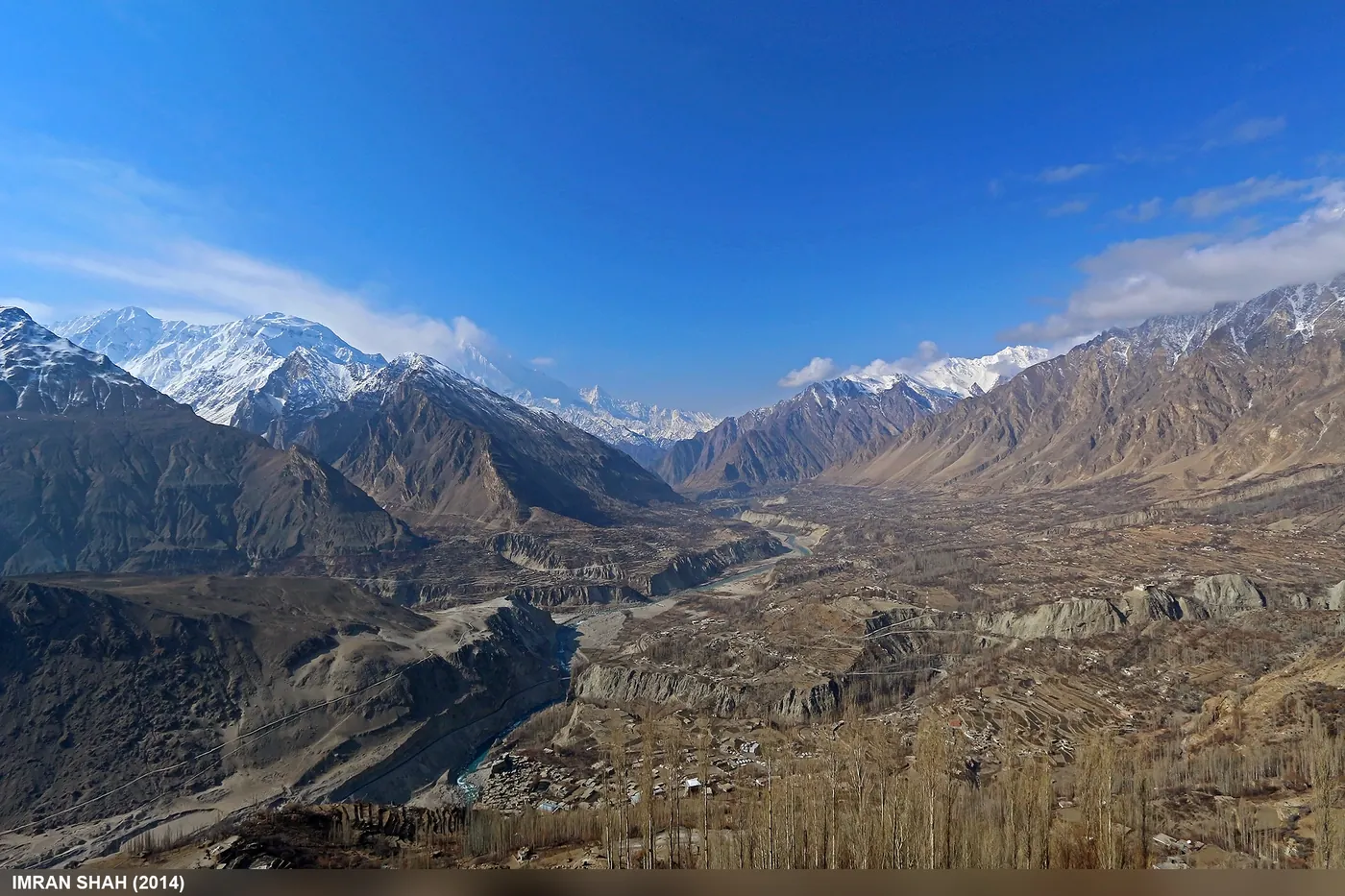
On a clear winter morning in Hunza, the peaks catch the light while the lanes below are still in shadow. You might find frost on the walls in Karimabad and fresh snow on the slopes above, or dry streets beneath an entirely white skyline. That contrast is part of the appeal. A good winter trip does not depend on waking up to falling snow.
The biggest adjustment from a summer itinerary is not what you see. It is how much you can comfortably do between sunrise and sunset. Choose one warm base, put the longer drive on your clearest day and keep one day free. That gives you time for the forts, a look at Attabad Lake and, if conditions cooperate, the first glimpse of the Passu Cones.
Hunza Valley in winter at a glance
| Trip detail | Recommended plan | What to check |
|---|---|---|
| Road approach | Islamabad → Karakoram Highway via Besham and Chilas → Gilgit → Hunza | Exact highway sections, weather and a daylight overnight stop |
| Air approach | Fly to Gilgit if flights are operating, then transfer by road | Flight status, pickup and a flexible return |
| Winter base | Karimabad for heritage walks; Aliabad for highway access | Room heating, hot water, meals and vehicle access |
| Short outings | Baltit Fort, Altit Fort and nearby village lanes | Opening hours and icy steps |
| Upper Hunza | Attabad Lake → Gulmit → Passu, if conditions allow | Road updates and the time needed to return before dark |
Think of the itinerary below as five days from Gilgit, not a five-day road return from Islamabad. If you drive the full route both ways, allow extra travel days. With one driver or a group that needs regular stops, decide on a daylight overnight break before setting off.
How to reach Hunza and choose your winter dates
By road: Plan for the Karakoram Highway
Use the Karakoram Highway as your baseline rather than planning a shortcut over Babusar Top. When Babusar is affected, official route notices may direct travellers onto the Karakoram Highway instead. That is an alternative route, not an assurance that every section is clear. Check the NHMP travel advisory and ask your driver to confirm the stretches you actually need. If authorities advise against travel, wait or revise the plan rather than looking for a way around a closure.
By air: Leave room for a delay
Flying to Gilgit can save a long drive from Islamabad, but do not build your itinerary around a tight connection. Before booking, check the operating schedule and fare-change terms with the airline. Confirm whether your hotel or driver can move the pickup if the flight changes. Keep your last night flexible and avoid putting a time-sensitive onward connection directly after the return flight. If a cancellation occurs, switch to road travel only after checking the route; an available car does not mean it is a good day to drive.
Snow season: Choose for conditions, not a calendar promise
December through February is a reasonable window to consider for a winter visit, but no specific date guarantees snow on Karimabad’s streets. Higher ground can look wintry when the valley floor is clear, and fog or cloud can hide the peaks after snowfall. Use the Pakistan Meteorological Department’s Gilgit-Baltistan forecasts before departure. Then ask your host about the approach to the property and the streets you expect to walk. A forecast for the region cannot tell you whether one steep hotel driveway is icy.
Where to stay: Make the evening easy
Karimabad suits travellers who want fort visits and short outings close to their room. Aliabad makes sense if easy access to the main road matters more than staying above the valley. The Gilgit-Baltistan Tourism Department’s Aliabad guide locates the town on the Karakoram Highway below Karimabad. Ask about the actual room heater, overnight operation, hot water and dinner availability, not just whether the booking says “heating.” If you are travelling with children or older relatives, favour straightforward vehicle access over an isolated view.
A flexible five-day winter itinerary from Gilgit
Day 1: Gilgit to central Hunza. Transfer to Karimabad or Aliabad in daylight and check in before the temperature drops. Buy any snacks or water you need for the next morning. If the lanes are clear, take a short walk to get your bearings. If the transfer runs late, go straight to your hotel and let the first proper outing wait.
Day 2: Baltit Fort and Karimabad. Visit Baltit Fort if its opening hours and the uphill approach suit your group. Leave time to look at the timber and stone construction rather than treating the fort as a quick photo stop. Follow it with a walk or a warm lunch in Karimabad. If the climb is slippery, enjoy the town at an easier pace instead.
Day 3: Altit Fort and a nearby viewpoint. Give Altit Fort its own morning. It was the royal residence before Baltit Fort and offers a different perspective on Hunza’s history. Call ahead about access and use the rest of the day for a village walk or a viewpoint your driver confirms is reachable. You do not need to add a high road to make the day worthwhile.
Day 4: Attabad Lake, Gulmit and optional Passu. Head into Gojal only if the highway and visibility are suitable. Stop first at Attabad Lake, then continue toward Gulmit. If you still have daylight and the road is clear, go on to see the Passu Cones. Use established viewpoints, not icy roadside edges. Do not count on boating or step onto lake ice. On a poor-weather day, stay near your base.
Day 5: Buffer and return to Gilgit. Keep this day for a missed nearby stop, an unhurried breakfast or a transfer. If the previous day was grey and this morning is clear, pick one short outing, not the whole upper-valley drive. For a booked flight, prioritise getting back to Gilgit with time to spare.
Winter budget, transport and what to pack
Get a quote that separates transfers, local sightseeing and an extra day with the driver. Ask whether fuel, driver accommodation and waiting are included, and what happens if a planned outing cannot go ahead. Compare rooms on the cost of heating, meals and flexible cancellation, not the advertised nightly rate alone. A cheaper room can be poor value if you have to find dinner elsewhere after dark.
Pack a warm base layer, an insulating mid-layer, a windproof outer layer, gloves and shoes with good grip. Keep spare socks, water, snacks and a power bank in a small day bag rather than buried in the boot. Save hotel pins, road instructions and booking numbers offline. For a long road transfer, agree on fuel and meal stops and leave spare time for the journey back. Tell someone at home where you expect to spend the night, especially if your return route is still weather-dependent.
A local driver familiar with winter conditions is worth considering if your group has never driven mountain roads in ice. Ask about the vehicle’s tyres and the driver’s plan if the road deteriorates. Avoid journeys that depend on racing darkness. The NDMA’s winter travel guidance recommends checking forecasts and road updates, using experienced drivers and confirming that accommodation has heating.
Frequently asked questions
Will I definitely see snow in Hunza in winter?
No. You may see snow on surrounding mountains without finding fresh snow in town. If snowfall is your main reason for travelling, look for a suitable forecast shortly before you leave and keep bookings flexible. Plan at least one outing you would still enjoy without snow.
Can I visit Attabad Lake and Passu on the same day?
Yes, if the road is clear and you have enough daylight for the return. Treat Passu as optional and set a turnaround time before you leave. A long lakeside stop or reduced visibility can be a good reason to finish the day in Gulmit.
Is Khunjerab Pass necessary for a winter trip?
No. Central Hunza and Gojal give you plenty to see without going to the border. Opening arrangements, road conditions and permission to travel can vary. If you are considering the pass, confirm the specific route and visitor access with local authorities instead of assuming that a border opening means a sightseeing trip can go ahead.
Is winter Hunza suitable for families?
It can be, especially with a heated base, shorter outings and flexible days. If your group struggles with cold, difficult footing or long transfers, plan fewer stops or choose a milder season. For a broader seasonal comparison, see our Hunza Valley travel guide.
Plan your winter trip to Hunza
Tell Adventurer Treks your dates, departure city and how your group likes to travel. We can help you decide whether to start in Gilgit or drive from Islamabad, choose a base with easy access, and build an itinerary that still works if an upper-valley outing has to wait.
Photo: Imran Shah / Wikimedia Commons, CC BY-SA 2.0. Resized and compressed; cropped in the preview; the adapted image retains the same licence.